
Biodiversity Net Gain: Why the Future of Our Landscapes Depends on What We Plant, Create and Maintain
As Biodiversity Net Gain requirements extend to major infrastructure projects from 2 November 2026, the role of professional landscaping and long-term grounds maintenance has never been more important.
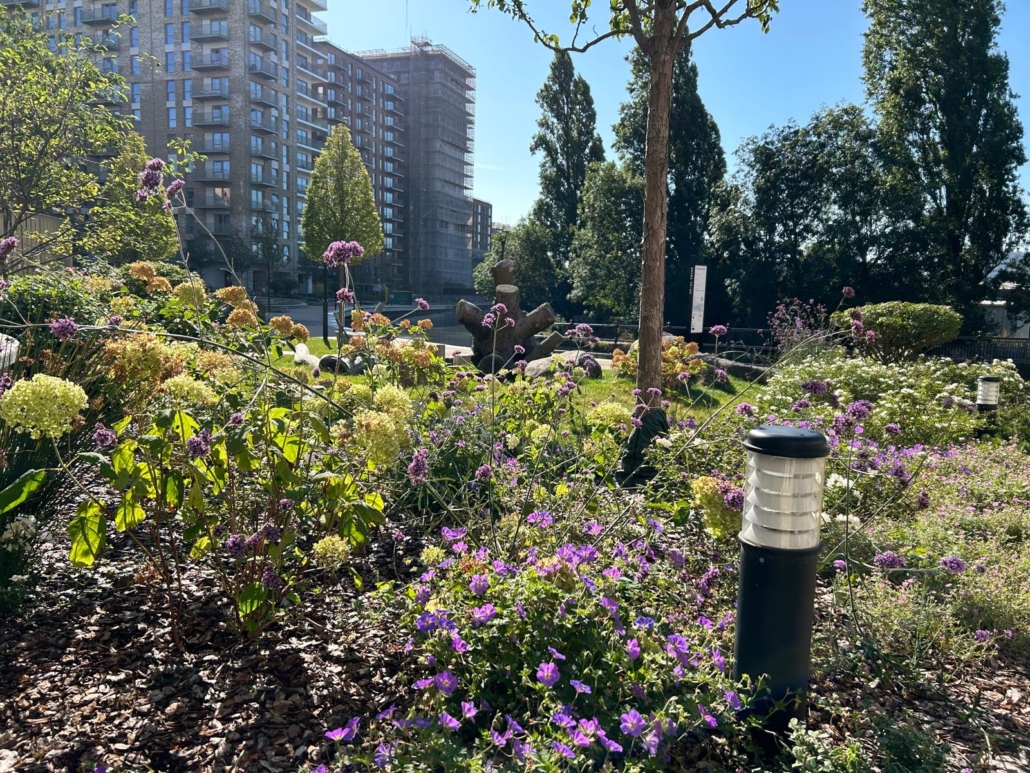
Across London and the South East, our landscapes are being asked to work harder. From residential developments and commercial premises to public spaces and major infrastructure projects, there is growing recognition that the land surrounding our buildings has a much greater purpose than simply looking attractive.
Well-designed and professionally maintained landscapes can support wildlife, improve biodiversity, help manage rainfall, provide natural cooling and create healthier environments for people.
At DB Landscape Management, we believe the real value of a landscape lies not only in how it looks when a project is completed, but in how it develops, performs and thrives over time.
And with Biodiversity Net Gain (BNG) becoming an increasingly important part of the planning and development process, that long-term perspective matters more than ever.
What is changing with Biodiversity Net Gain?
Biodiversity Net Gain is a statutory requirement designed to ensure that qualifying developments leave the natural environment in a measurably better condition than before construction begins.
Mandatory BNG has applied to most qualifying developments in England since February 2024.
From 2 November 2026, the requirements will also extend to qualifying nationally significant infrastructure projects (NSIPs), bringing major infrastructure developments into the framework.
Under the legislation, developments within scope must deliver a minimum 10% increase in biodiversity value, calculated using the government’s Statutory Biodiversity Metric.
The government’s guidance on Biodiversity Net Gain for nationally significant infrastructure projects explains the requirements and how they apply to major developments.
Not every development is subject to BNG, and exemptions apply. However, for those projects within scope, biodiversity is now a measurable planning requirement rather than simply an environmental aspiration.
The important role of soft landscaping and tree planting
Soft landscaping has a significant role to play in creating and enhancing habitats within developments.
Carefully considered planting schemes can help transform relatively low-value areas into more diverse landscapes that provide food, shelter and connectivity for wildlife.
Depending on the site’s existing habitats, ecological objectives and approved design, opportunities may include:
- Tree planting: Introducing appropriately selected trees to provide habitat, improve canopy cover and contribute to greener urban environments.
- Species-rich grassland: Creating wildflower meadows and diverse grassland habitats that support pollinators and other wildlife.
- Hedgerows and shrub planting: Establishing connected planting that provides shelter, nesting opportunities and movement corridors for wildlife.
- Habitat enhancement: Improving existing planted areas through appropriate species selection, soil management and changes to maintenance practices.
- Sustainable landscape features: Integrating planting within rain gardens, swales and other landscape features where appropriate to the site’s design.
These interventions can contribute towards a development’s biodiversity objectives, but their value must be assessed through the statutory metric.
The metric considers habitat type, size, condition and other factors, meaning that planting more trees or introducing additional vegetation does not automatically equate to achieving the required 10% gain.
The government’s guidance on creating on-site biodiversity gains emphasises the importance of considering soil conditions, suitable planting, access for maintenance and the practical feasibility of establishing habitats.
For landscape contractors, this reinforces the importance of working closely with ecologists, landscape architects and developers from the outset.
Why successful BNG depends on long-term landscape management
There is an important distinction between installing a landscape and establishing a successful habitat.
A newly planted tree, for example, needs appropriate care to become a healthy, established feature of the landscape. Similarly, a wildflower meadow requires a very different maintenance approach from a conventional amenity lawn.
Biodiversity Net Gain places greater emphasis on the long-term condition and management of habitats.
Under the statutory framework, significant on-site habitat enhancements and off-site biodiversity gains must generally be secured and maintained for at least 30 years.
The government’s guidance on Habitat Management and Monitoring Plans sets out how habitat objectives, management responsibilities and monitoring arrangements should be documented.
This creates an important role for professional landscape management contractors.
Maintenance programmes may need to consider:
- Establishment care for newly planted trees, hedges and shrubs.
- Appropriate mowing regimes for species-rich grasslands.
- Management of invasive and undesirable plant species.
- Soil health, mulching and moisture management.
- Replacement planting where establishment has been unsuccessful.
- Practical maintenance records to support the wider monitoring programme.
The objective is not simply to keep landscapes tidy. It is to manage them in ways that support their intended ecological function.
A landscape designed for biodiversity should also be maintained for biodiversity.
What does BNG mean for property managers?
For property managers responsible for residential developments, commercial premises and shared landscapes, Biodiversity Net Gain introduces another important consideration.
Where a development has approved habitat management commitments, the ongoing maintenance of those areas needs to reflect the ecological objectives established during planning.
A landscape containing species-rich grassland, for example, may require seasonal cutting and removal of arisings rather than frequent close mowing.
New tree planting may require structured establishment care, while hedgerows and other planted habitats may need carefully timed maintenance to protect their ecological value.
These approaches can sometimes look different from traditional grounds maintenance practices.
For property managers, understanding why a landscape is being managed in a particular way can be just as important as the maintenance itself.
It also means that continuity matters. When responsibility for a development passes from the original developer to a property management company, the relevant landscape management requirements need to be understood and carried forward.
Not every existing property is subject to a statutory BNG obligation. However, biodiversity-focused maintenance can still deliver meaningful environmental and social benefits across established sites.
At DB Landscape Management, we see considerable value in helping property managers balance attractive, accessible shared spaces with planting and maintenance practices that support biodiversity.
Turning landscape designs into living, thriving spaces
For developers, the practical delivery of a landscape scheme is an important part of meeting ecological objectives.
The best biodiversity strategies are those that consider not only what is proposed on a drawing, but how the landscape will be installed, established and maintained.
This is where experienced landscape contractors can make a difference.
At DB Landscape Management, our soft landscaping and tree planting services can support the delivery of landscape schemes designed around ecological objectives.
Working alongside the project’s ecological and design professionals, our role can include the practical implementation of planting specifications, ground preparation, tree and shrub installation and the establishment of planted habitats.
Our ongoing grounds maintenance services can then help manage those landscapes in accordance with agreed maintenance specifications and habitat objectives.
By bringing installation and maintenance considerations together, developers and property managers can take a more joined-up approach to the long-term performance of their landscapes.
Biodiversity and the social value of shared landscapes
Although BNG is measured through ecological outcomes, the benefits of greener, more diverse landscapes can extend well beyond wildlife.
Across residential and commercial developments, shared green spaces provide opportunities for people to spend time outdoors, connect with nature and enjoy their surroundings.
Thoughtful planting can introduce seasonal interest, improve the character of developments and make outdoor spaces more inviting.
For property managers, this creates an opportunity to consider both the ecological and social value of the landscapes under their care.
A well-maintained landscape should work for the people who use it, while also providing opportunities for nature to thrive.
These objectives need not be in conflict. With the right design and maintenance approach, shared landscapes can deliver both.
How DB Landscape Management can support your development
As Biodiversity Net Gain becomes embedded in the development process, the relationship between ecological planning, landscape installation and long-term maintenance will become increasingly important.
DB Landscape Management works across London and the South East, providing professional soft landscaping, tree planting and grounds maintenance services for residential developments, commercial premises and managed landscapes.
We can support developers, main contractors, landscape architects and property managers by delivering planting and landscape works in accordance with agreed specifications, followed by appropriate ongoing maintenance.
Where BNG obligations apply, we can work alongside the appointed ecologist and project team to help implement and maintain the landscape elements of an approved biodiversity strategy.
The 10% BNG requirement is a measurable target. Achieving lasting results depends on what happens on the ground, and how those landscapes are cared for in the years that follow.
Let’s talk about your landscape
Whether you are planning a new development, delivering an approved landscape scheme or reviewing the management of an established site, DB Landscape Management can help.
Our team understands the importance of professional installation, careful establishment and reliable ongoing maintenance.
If your next project includes biodiversity objectives, talk to us about how we can support the landscape installation and maintenance programme.
www.dblandscapemanagement.co.uk




Leave a Reply
Want to join the discussion?Feel free to contribute!